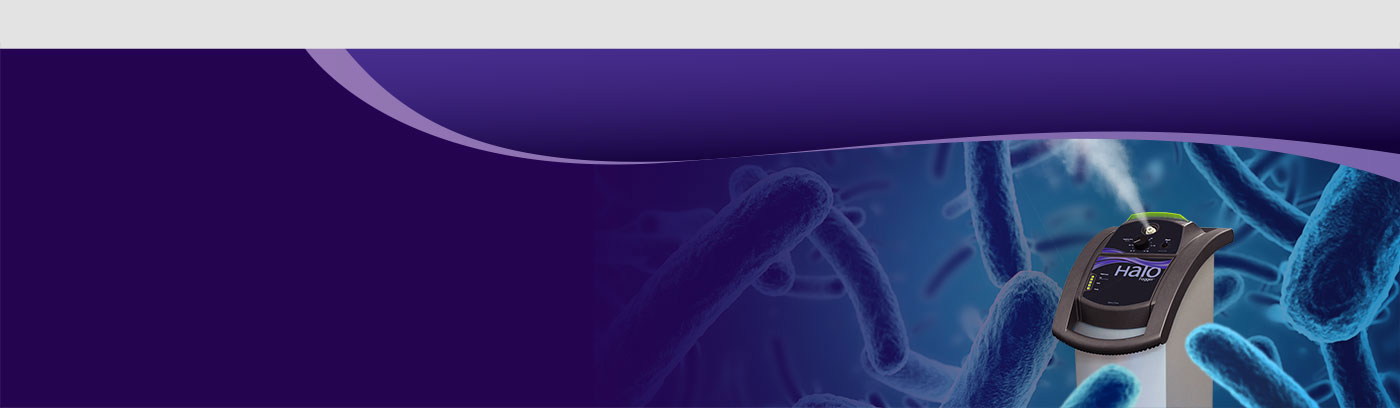
- Manual disinfection leaves gaps in examination rooms, surgical suites, and isolation units that whole-room fogging closes.
- The HaloFogger disinfects hard, non-porous surfaces in 30-45 minutes, enabling efficient room turnover.
- HaloMist achieves 99.9999% kill against C. difficile spores, Staphylococcus aureus, and Pseudomonas aeruginosa.
- The formula decomposes into water and oxygen, leaving no residue that could harm animals or damage equipment.
Where whole-room disinfection matters most in your practice
Veterinary clinics operate in a complex environment. Multiple animal species, high-traffic areas, and specialized equipment create spaces where bacteria, viruses, fungi, and spores thrive in areas that traditional disinfection methods cannot reach. Examination rooms, surgical suites, recovery areas, and isolation units all present unique challenges that manual wiping and spot treatments leave unresolved.
-
Examination rooms
High-traffic areas where animals with unknown pathogenic status pass through daily. The HaloFogger's dry mist penetrates the entire room, disinfecting hard non-porous surfaces including walls, examination tables, floors, and equipment surfaces.
-
Surgical suites and recovery areas
These spaces demand complete coverage of hard non-porous surfaces to reduce pathogen transmission during critical procedures. The ability to disinfect high-touch surfaces throughout the room ensures comprehensive protection between surgeries and recoveries.
-
Isolation and quarantine units
Animals with suspected infectious disease require thorough disinfection between patients. With the HaloFogger, a single operator disinfects an entire isolation unit in minutes, then the room is safe to re-enter once hydrogen peroxide is below 0.2 ppm.
-
Radiology rooms and equipment storage
HaloMist's non-corrosive formula disinfects sensitive equipment without residue, making it suitable for routine use in spaces where delicate electronics must be protected.
The pathogens your practice faces
The HaloFogger eliminates the most resistant pathogens your clinic encounters. When used in the HaloFogger, HaloMist carries EPA registration for the following pathogen claims on hard, non-porous surfaces:
-
Clostridium difficile spores
Kills 99.9999% of C. difficile spores. The most resistant pathogenic form according to the hierarchy of microorganisms. Highly relevant to equine and livestock medicine, where C. difficile causes enterocolitis.
-
Staphylococcus aureus
Kills 99.99% of Staph bacteria. Common cause of skin and wound infections across all animal species. Found on high-touch surfaces and animal contact areas.
-
Pseudomonas aeruginosa
Kills 99.99% of Pseudomonas bacteria. Causes respiratory, wound, and reproductive tract infections in animals. Opportunistic pathogen that thrives in clinical environments.
Why whole-room disinfection works better than manual methods
Coverage that manual methods miss
The HaloFogger goes above, beyond, under and around disinfecting sprays and wipes. It reaches into nooks, crevices and corners that standard spot-cleaning cannot access, disinfecting all pre-cleaned, hard, non-porous room surfaces.
Reduces risk of cross-contamination
Whole-room treatment reduces the risk of cross contamination of pathogens between treated surfaces, protecting both animals and staff.
HaloMist achieves 99.9999% kill against C. difficile spores at 5% hydrogen peroxide. Unlike competing systems requiring higher concentrations, this formula is non-corrosive and safe for sensitive equipment and electronics.
No residues
The formula decomposes into water and oxygen, leaving no detectable residue on surfaces or equipment. When you re-enter the room, you experience the benefit of complete disinfection without chemical buildup.
Operational and financial benefits
Efficiency gains
- Single operator disinfects entire isolation or surgical units in minutes
- Process takes approximately 30-45 minutes depending on room size
- Efficient room turnover between patients
- Safe re-entry once hydrogen peroxide is below 0.2 ppm
Labor and cost reduction
- Reduces labor costs associated with manual disinfection
- Integrates into existing cleaning workflows
- Scalable technology for multi-room treatment
- Minimal maintenance requirements
Long-term ROI
- Reduces facility-acquired infections
- Protects animal health and staff safety
- Years of reliable performance
- Minimal downtime and maintenance
Frequently asked questions
Quick answers on safety, room turnover, residue, and clinic applications.
-
Yes. The HaloFogger is used when animals are not present. Surfaces are treated during off-hours or between appointments. Once hydrogen peroxide is below 0.2 ppm and the room has aerated, it is safe for animals and staff to re-enter.
-
The entire process takes approximately 30-45 minutes depending on room size. Preparation, fogging, and aeration can be completed quickly, allowing for efficient room turnover between patients.
-
No. HaloMist decomposes into water and oxygen, leaving no detectable residue on surfaces. Independent testing confirmed that when applied correctly, no silver residue remains.
-
The HaloFogger disinfects hard, non-porous surfaces in sealed rooms and spaces. This includes examination rooms, surgical suites, recovery areas, isolation units, radiology rooms, and equipment storage areas. For specific applications, consult the user manual.
Ready to strengthen your disinfection strategy?
Contact Halosil NXT to learn more about the Halo Disinfection System and how whole-room disinfection fits your veterinary clinic's protocols.